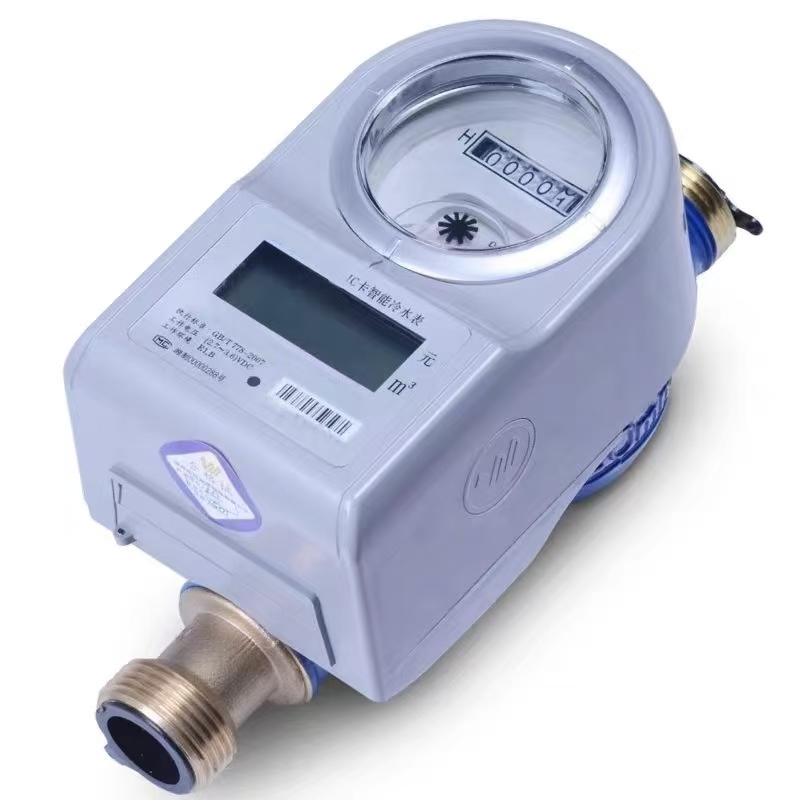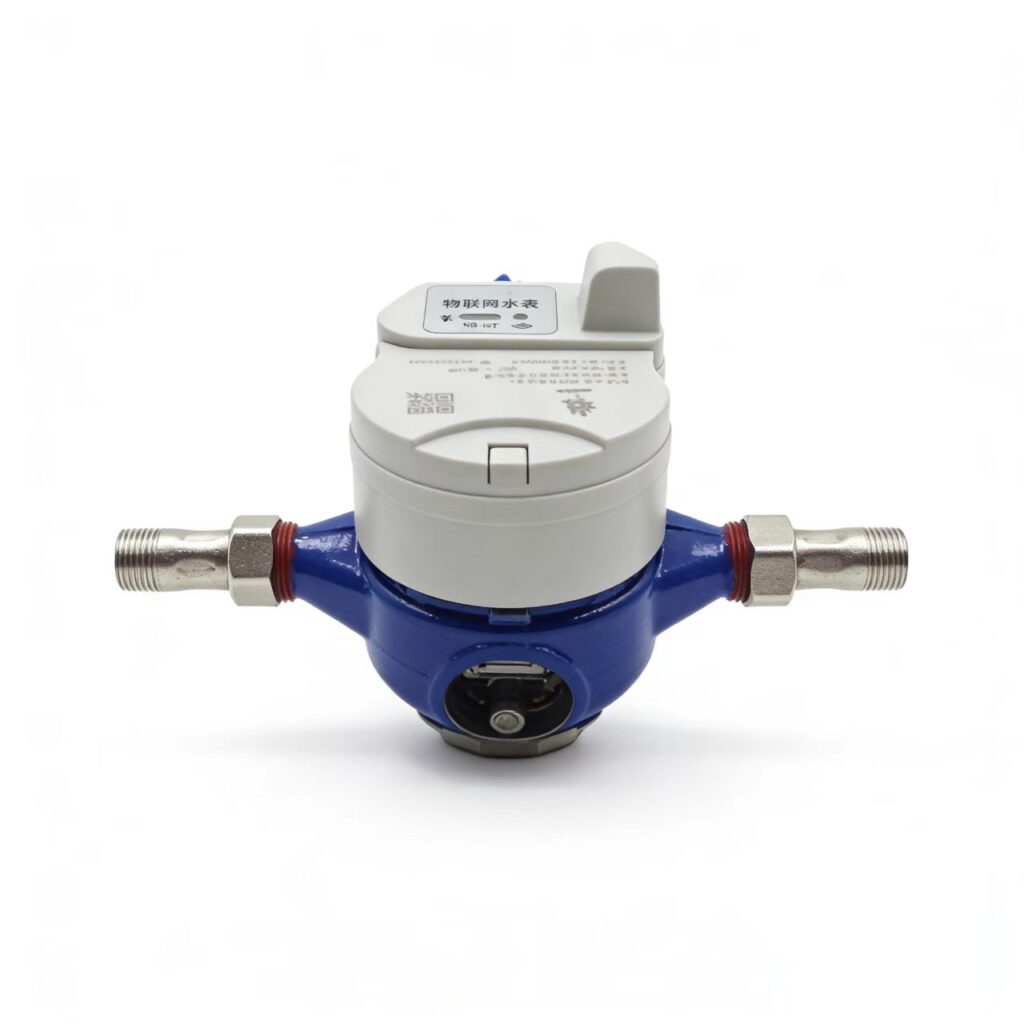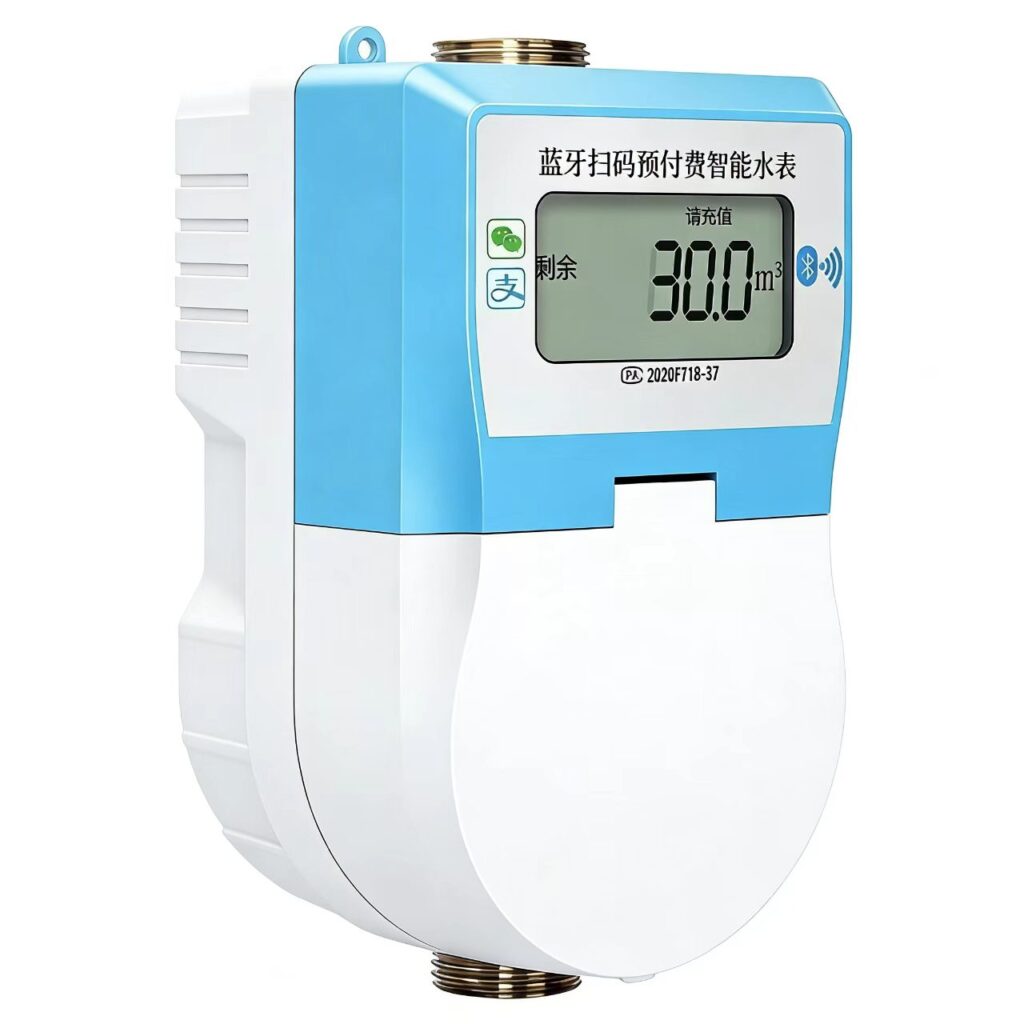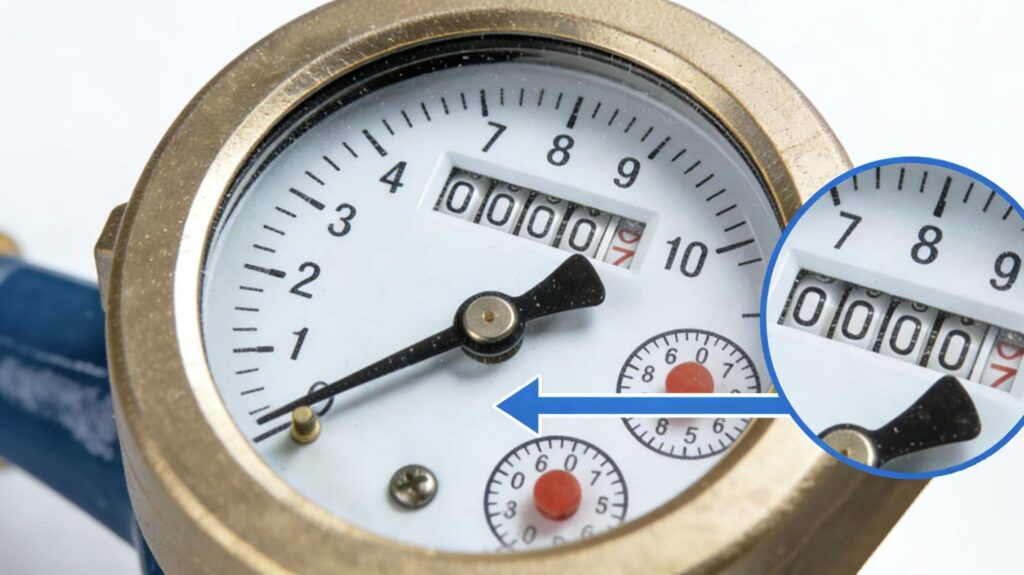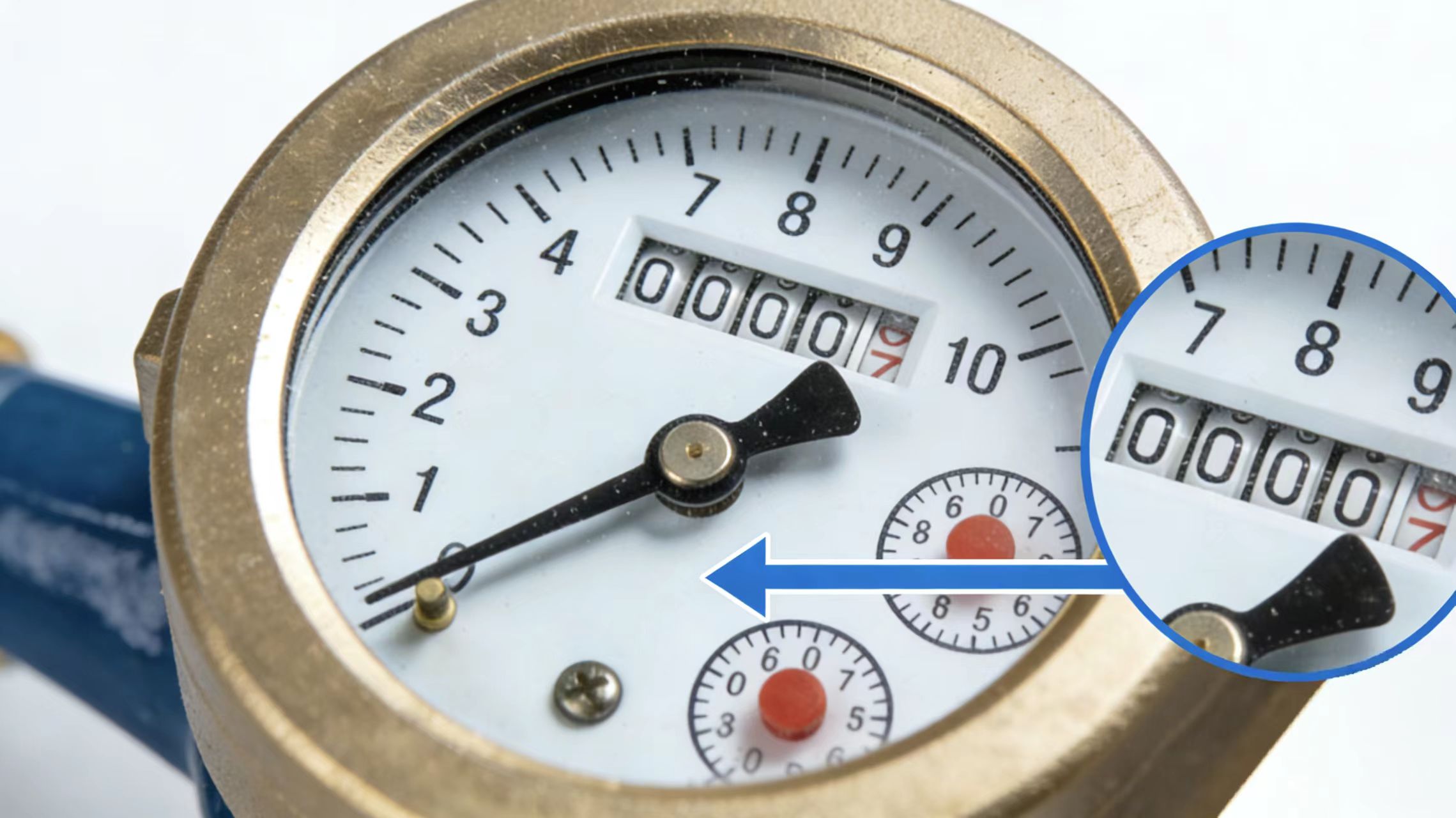
A water meter is an important device that records the water consumption of a household or business. Reading your water meter correctly not only helps you verify your water bill but also allows you to detect leaks promptly and save water. Whether you live in Australia, New Zealand, the UK, or any other region using metric or imperial units, this article will provide you with clear steps and practical tips.
Why Read Your Water Meter?
Regularly reading your water meter is a simple yet powerful habit that offers significant benefits for both your wallet and the environment.
Firstly, it serves as your primary defense against billing errors. By comparing your own readings with the utility company’s bills, you can verify that you are charged only for the water you actually used, helping you avoid overpaying due to estimation errors or system mistakes.
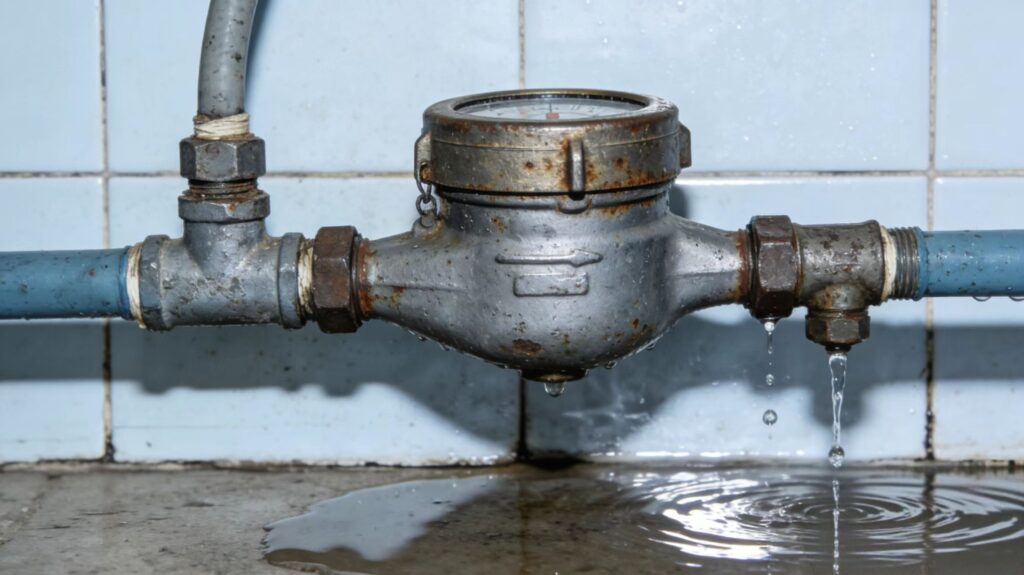
Secondly, your water meter is an essential tool for leak detection. By turning off all faucets and water-using appliances, a quick check of the meter can reveal hidden issues. If the meter dial continues to move, it indicates a leak—often from a silent toilet flush or a dripping pipe. Early detection allows you to address these problems promptly, preventing both water waste and potential property damage.
Finally, monitoring your usage promotes water conservation. Understanding your consumption patterns is the first step toward managing them. This awareness encourages the adoption of water-saving practices, such as shorter showers or fixing drips, which helps preserve a vital resource and contributes to a more sustainable and cost-effective household.
General Reading Water Meter Steps
1. Locate the Meter
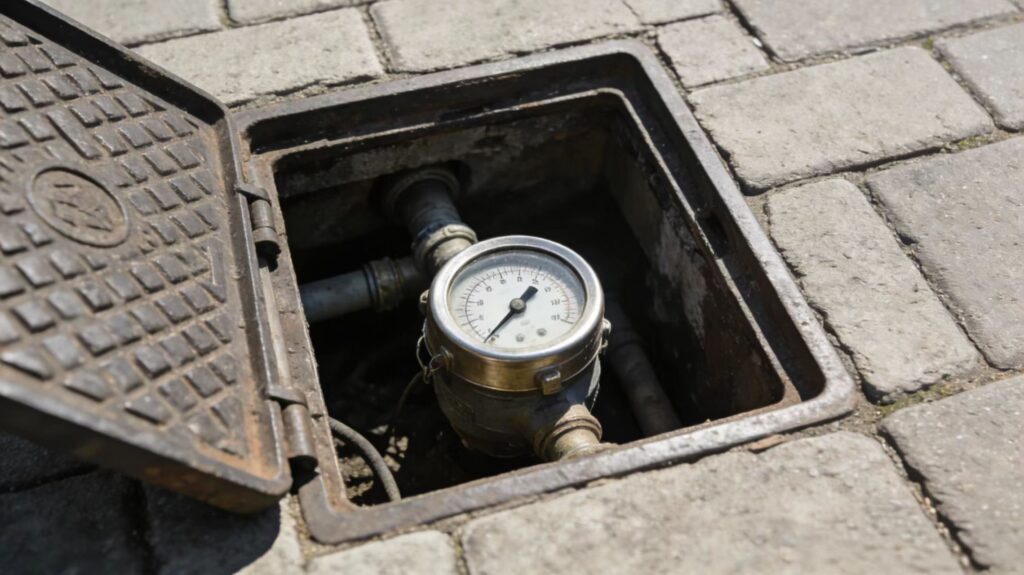
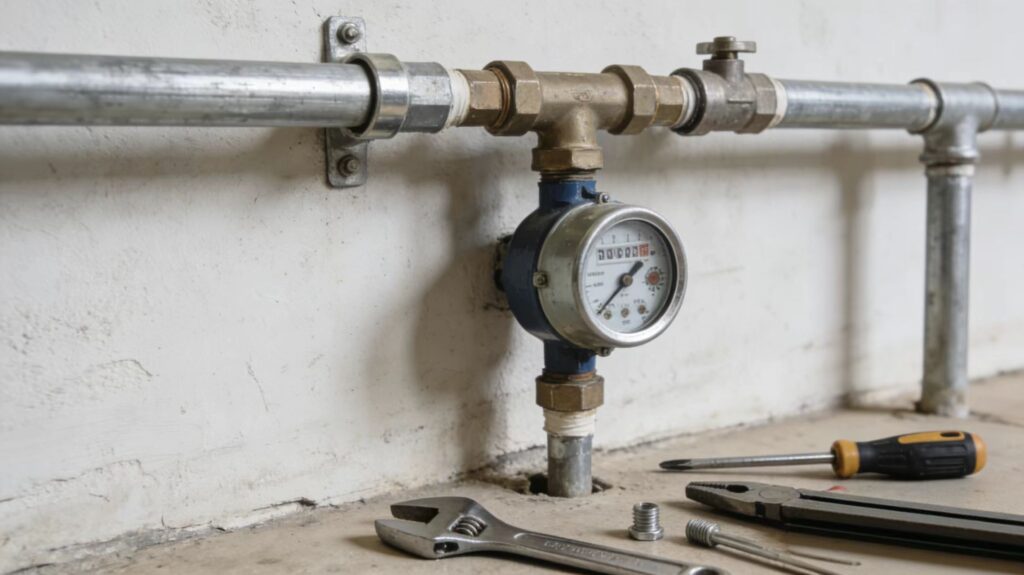
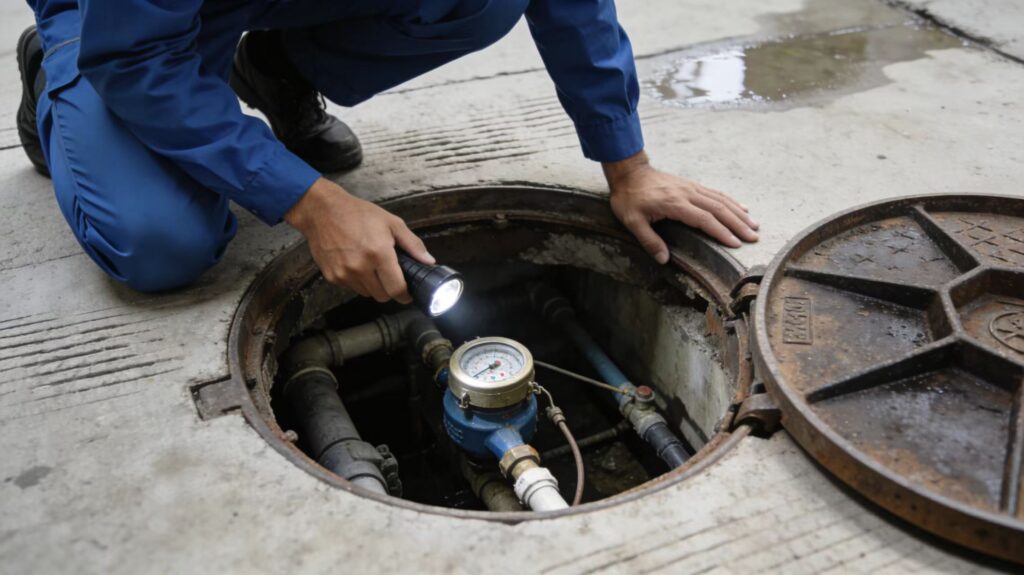
To begin, find your water meter. It is typically situated near the property line in a concrete box (“meter pit”) close to the sidewalk or street. In warmer climates, it might be mounted on an exterior wall of the house or inside the basement. Use a tool like a screwdriver to carefully pry off the heavy lid, watching for insects or debris.
2. Clean the Dial
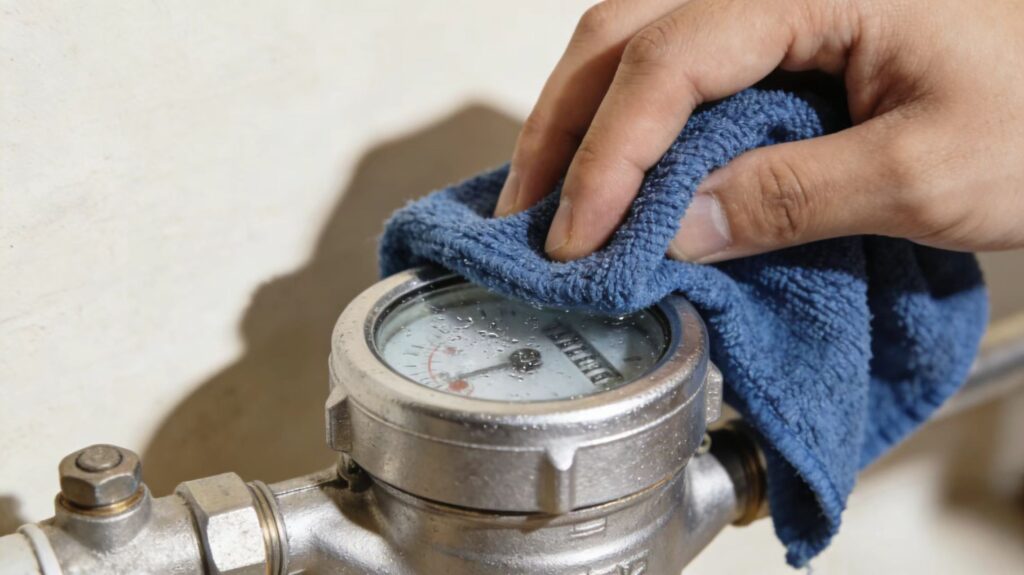
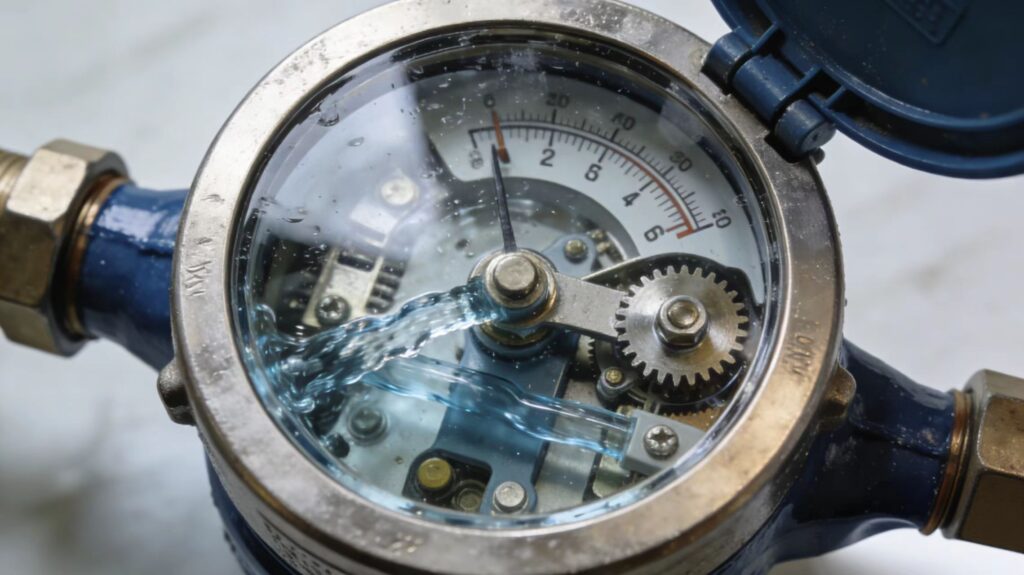
Once the lid is open, the meter face may be dirty or clouded. Use an old rag or a paper towel to gently wipe the glass or plastic covering. Removing mud, spiderwebs, or condensation is essential. A clean dial ensures you can accurately see the position of the needles or the digital display without guesswork or errors.
3. Read the Meter
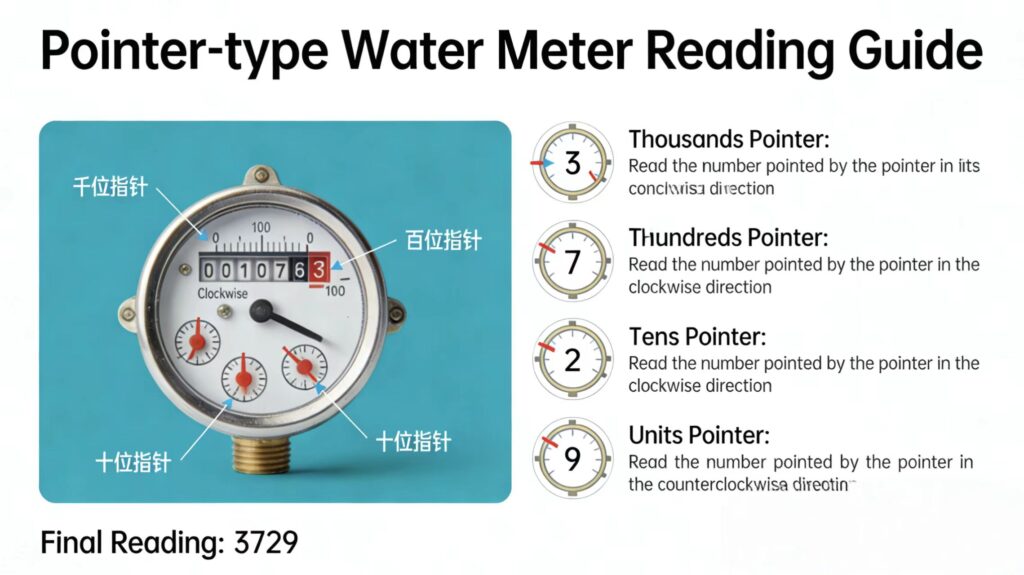
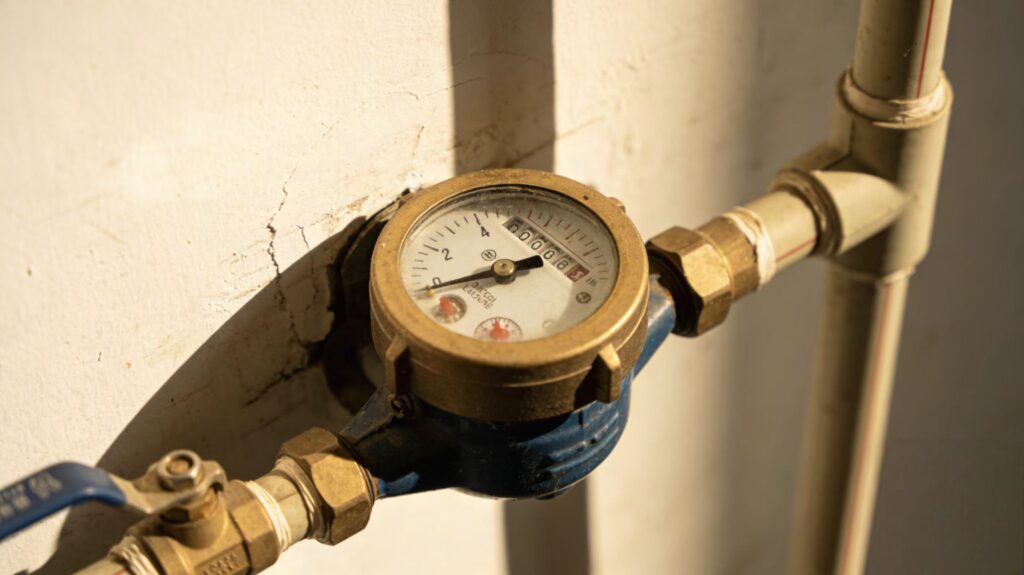
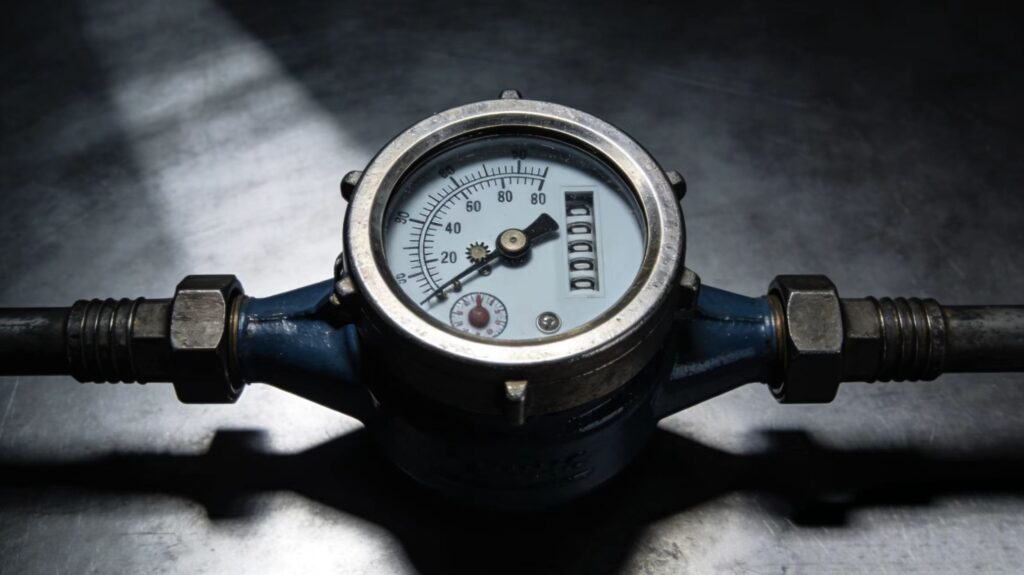
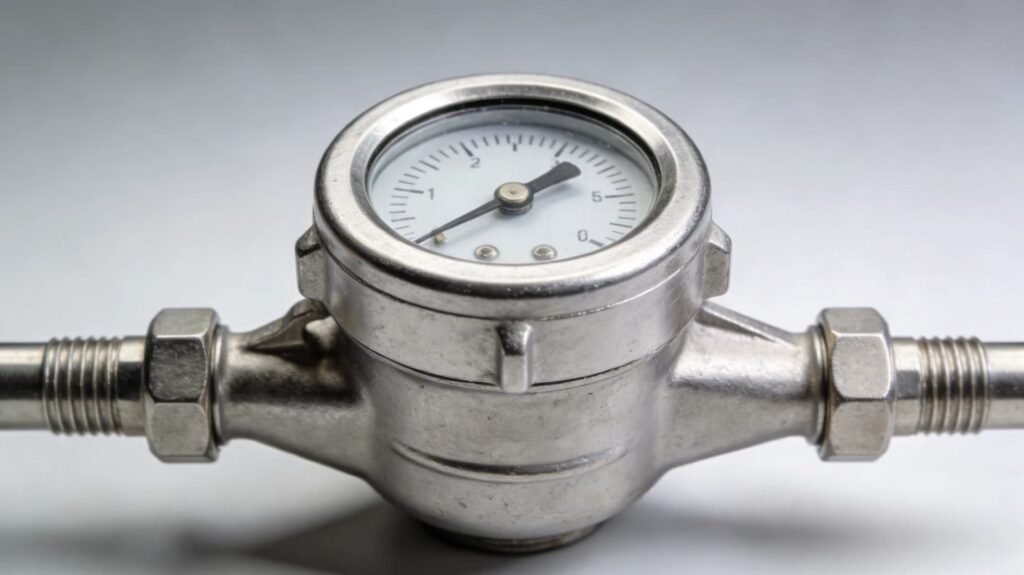
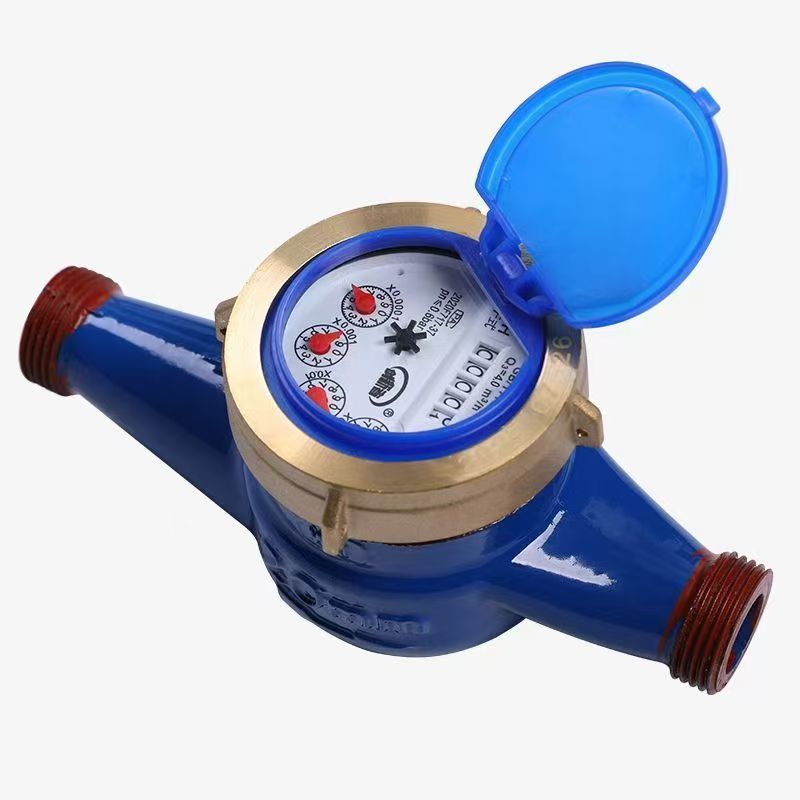
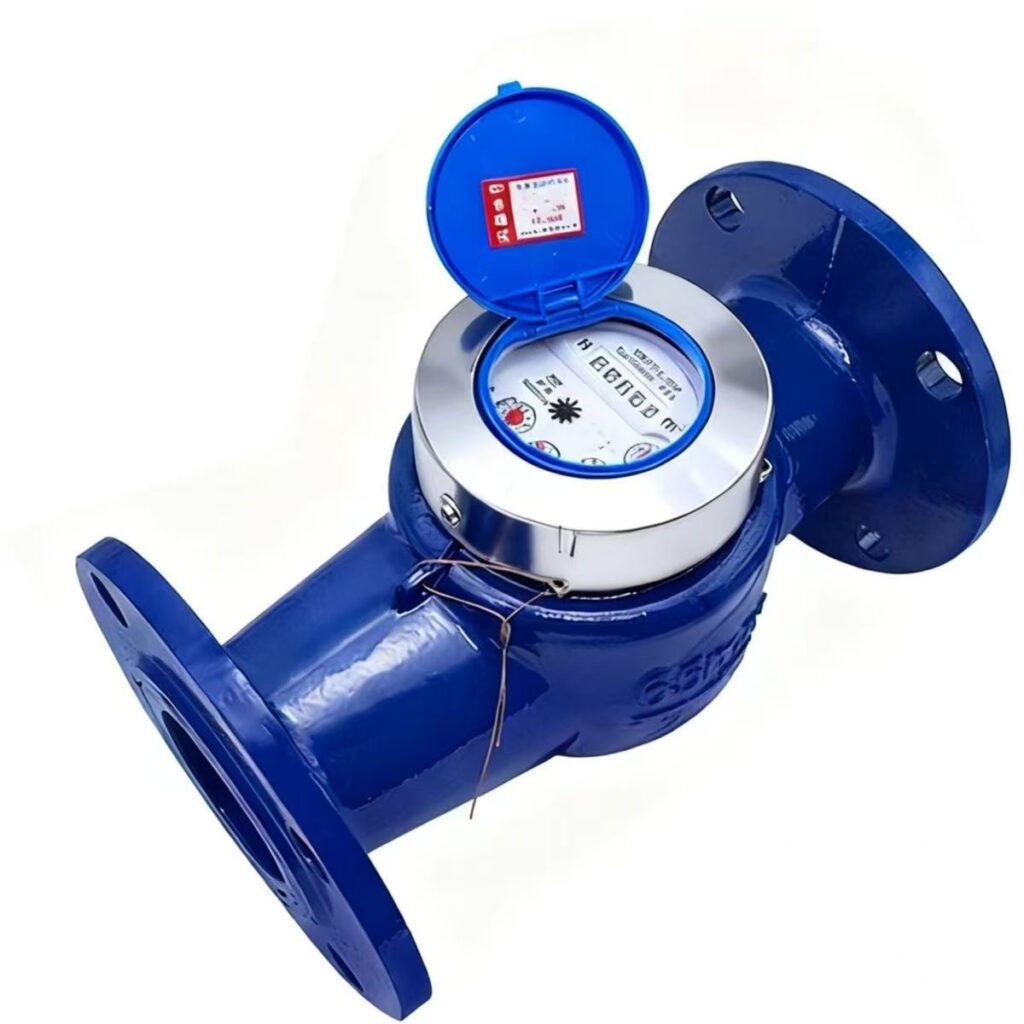
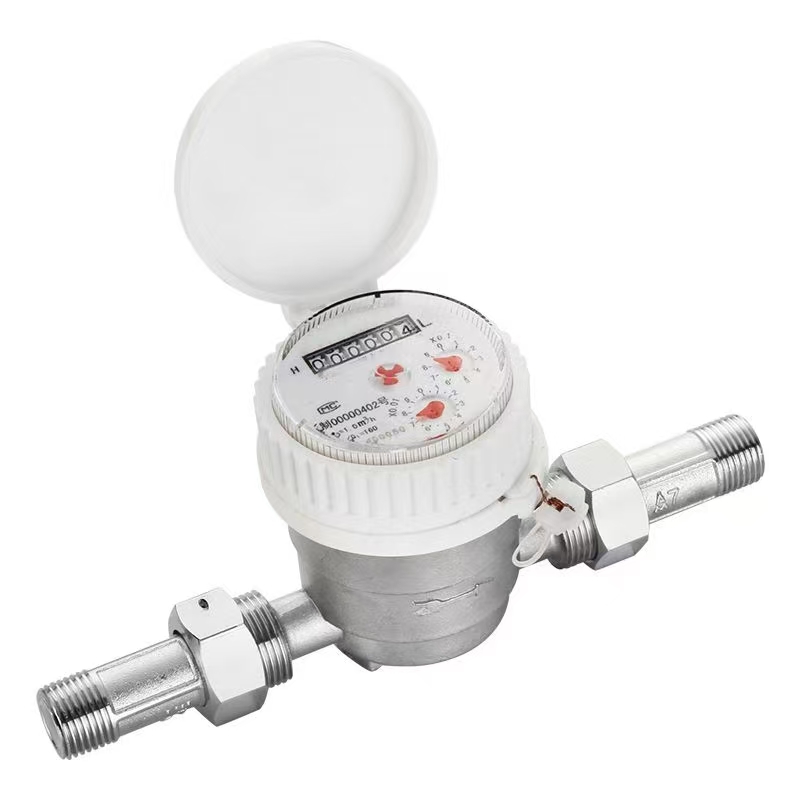
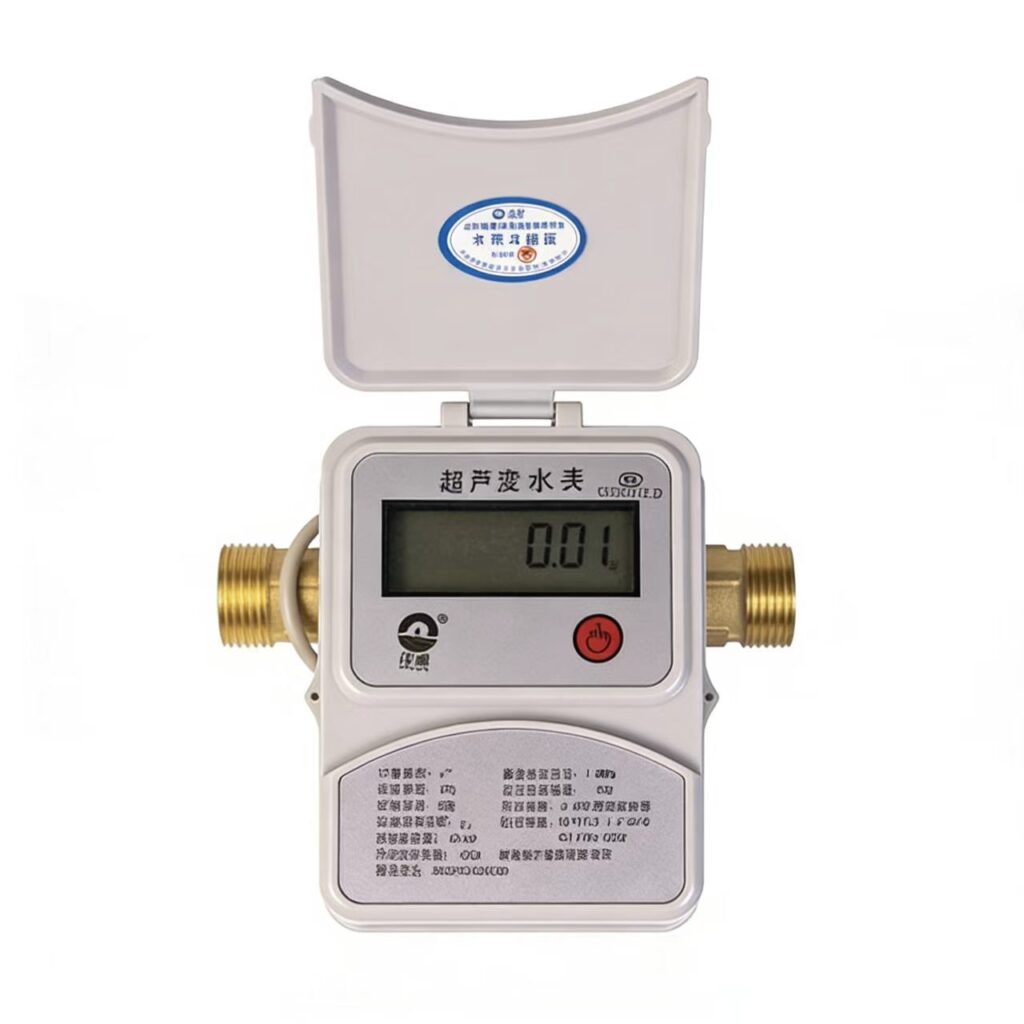
If you have a digital meter, simply write down the numbers shown (typically black digits on white). For analog dials, read the dials from left to right, noting the number each pointer has just passed. The sweep hand measures fractions of a gallon; if it is moving while water is off, you likely have a leak.
4. Record the Reading
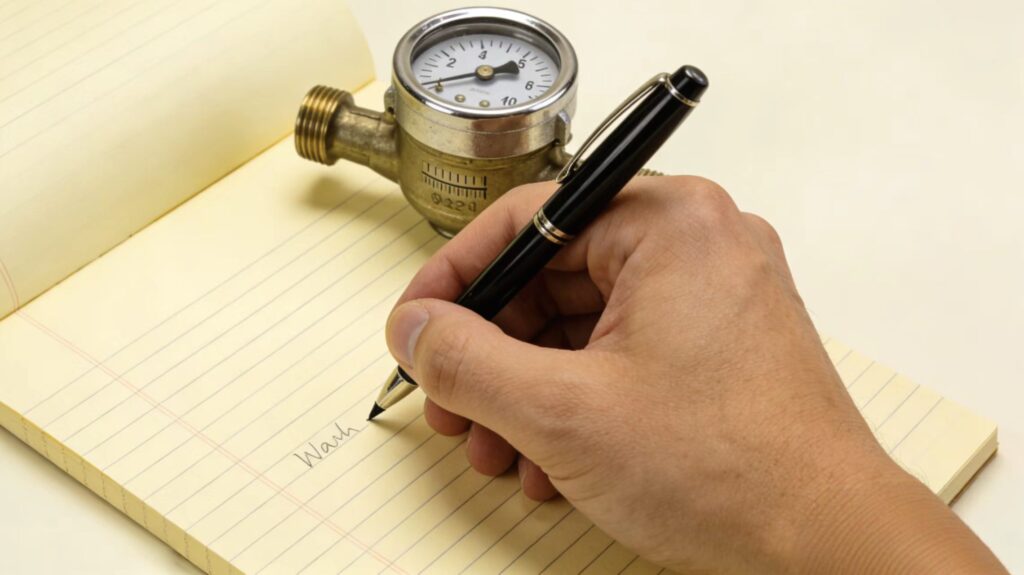
After noting the numbers, write them down immediately along with the current date. Keep a log on your phone or a notepad. This creates a history of your usage. Having this record allows you to calculate your consumption between billing cycles and provides concrete evidence should you ever need to dispute a utility bill.
How to Read Different Types of Meters
Suppose the display shows 001234 m³. This means 1234 cubic meters have been used. If the last digit is red or a different colour, it usually indicates a decimal, e.g., 00123.4 means 123.4 cubic meters.
2.Dial Meter Example
A dial meter has several small dials, each marked with a multiplier, such as ×1000, ×100, ×10, ×1, ×0.1, etc. To read it, look at the number each pointer points to, multiply by the corresponding multiplier, and then add them all. For example:
- ×1000 pointer points to 1 → 1000
- ×100 pointer points to 2 → 200
- ×10 pointer points to 3 → 30
- ×1 pointer points to 4 → 4
Total consumption = 1000 + 200 + 30 + 4 = 1234 cubic meters.
Note: Pointers may not align exactly; usually take the number the pointer has just passed. If a pointer is exactly between two numbers, take the smaller one.
The difference between gallons and cubic meters in water meter readings
- Cubic Meter (m³): Internationally common; 1 m³ ≈ 220 imperial gallons or 264 US gallons.
- Gallon (gal): Used in the UK, US, etc. (imperial or US gallons). The reading method is the same, but the unit differs. An imperial gallon is slightly larger than a US gallon.
If your meter measures in gallons, simply record the reading without conversion.
Frequently Asked Questions about Water Meter Readings
Q: What if my meter reading doesn’t match my bill?
A: First, re‑read your meter to confirm. If it still doesn’t match, contact your water utility and provide your reading for verification.
Q: The meter spins fast but I can’t find a leak?
A: There may be a hidden leak, such as underground or inside walls. It’s advisable to have a professional inspection.
Q: What if my meter is broken or shows abnormal readings?
A: Contact your water utility; they will arrange for inspection or replacement. In the meantime, billing may be based on average historical usage.
结论
Learning to read your water meter is a fundamental skill for every household. It helps you manage water bills and promote environmental conservation. No matter where you live, you can easily handle it by mastering the basic methods. It is recommended to record the water meter reading quarterly and develop the habit of checking for leaks to ensure every drop of water is used wisely.
Authoritative References and Further Reading
【1】 International Organization for Standardization (ISO)
- ISO 4064 “Water meters for cold potable water and hot water” series, specifying technical requirements, installation, and test methods.
【2】 American Water Works Association (AWWA)
- Publishes manuals on water meter selection, installation, and maintenance, including the “Meter Manual” (M6).
【3】 European Committee for Standardization (CEN)
- EN 14154 “Water meters” standard, adopted by most European countries.
【4】 International Water Association (IWA)
- Publishes professional publications on water metering and leakage control.